
Insights
The Complete Guide to Buying Property on La Palma
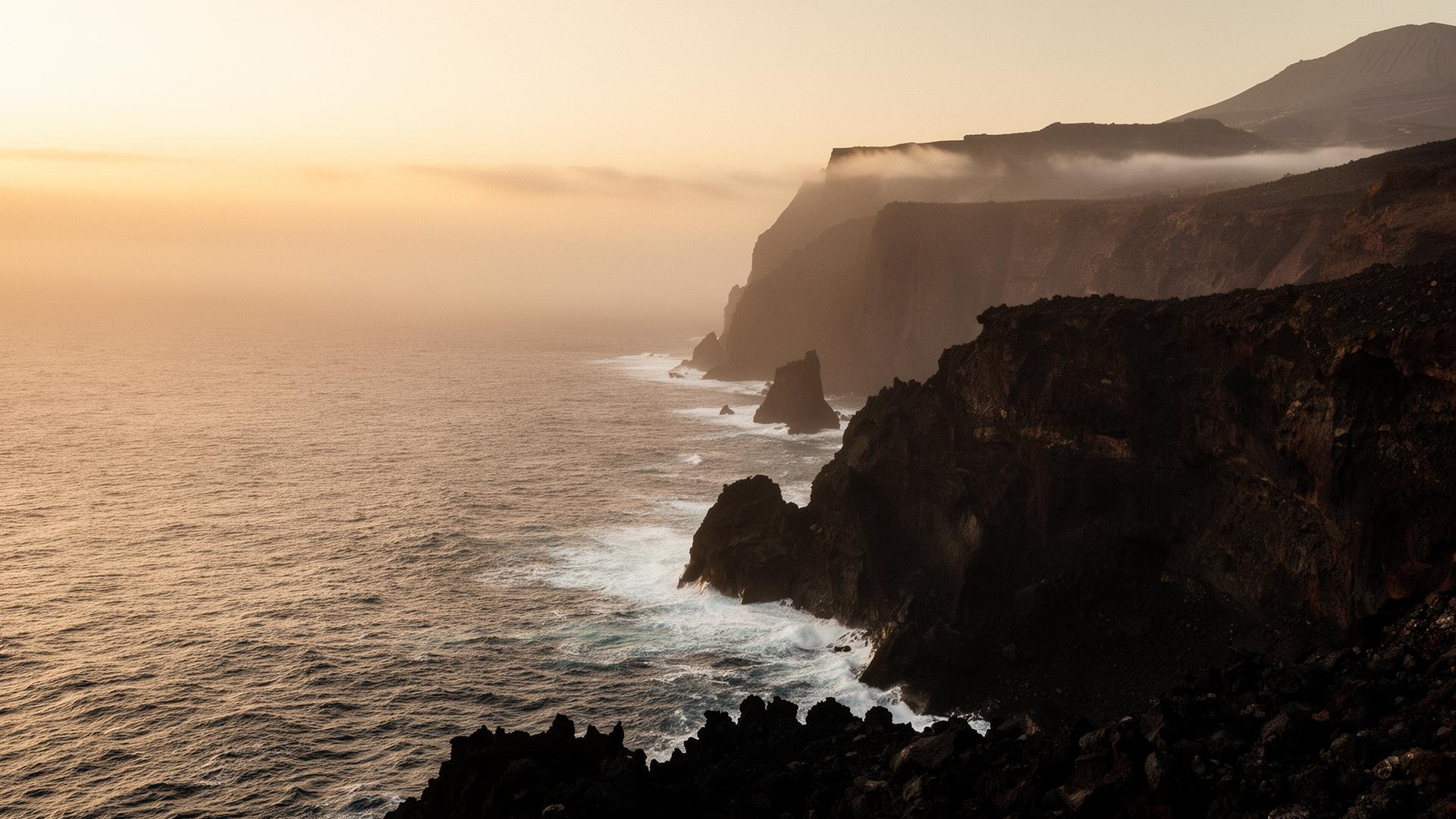
La Palma occupies a particular place among the Canary Islands. It is quieter than its larger neighbours, protected by UNESCO as a Biosphere Reserve, and shaped by a landscape that moves from black-sand coastline to pine-forested ridges in the space of a single afternoon. For international buyers, the island offers something increasingly rare in southern Europe: a property market that has not been remade by mass tourism.
This guide sets out, in plain terms, how a purchase on La Palma actually proceeds. It is written for buyers who value clarity over urgency and who would rather understand the framework than be hurried through it.
Why International Buyers Choose La Palma
Most of our clients arrive having considered Mallorca, Ibiza or the Costa del Sol first. They are drawn to La Palma by what those markets no longer offer: privacy, a coherent rural character, and prices that still reflect the underlying value of the land.
The island's microclimates support orchards, vineyards and traditional fincas at altitudes ranging from sea level to more than a thousand metres. Buyers come for second homes, year-round residences, agricultural projects and discreet investment positions — and, frequently, for a combination of all four.
The Buying Process
A typical purchase on La Palma unfolds over eight to twelve weeks. After viewings — in person or by private video tour — a buyer selects a property and we coordinate the documentation required for legal review: title deed (escritura), nota simple from the Land Registry, cadastral records, building licences and any community statutes.
Once the buyer is comfortable with the legal position, a reservation contract or contrato de arras is signed and a deposit is paid. Completion takes place before a Spanish notary, who witnesses the signing of the public deed. The property is then registered in the buyer's name at the Land Registry.
Legal Considerations
Spanish property law is well established and, for resale homes, comparatively predictable. The points that most often require attention on La Palma concern rural properties: the precise boundaries of a plot, the legal status of older constructions, and the planning rules that govern extensions or new builds on agricultural land.
We recommend that every buyer instruct an independent Spanish lawyer, unconnected to the seller, to verify these points before any deposit is committed.
The NIE Number
A Número de Identificación de Extranjero (NIE) is required of every foreign buyer. It is the tax identification number used for the purchase, the title registration and all subsequent dealings with the Spanish authorities.
The NIE can be obtained in Spain or through a Spanish consulate abroad. In practice, most of our clients delegate the application to their lawyer by means of a power of attorney, which removes the need to travel solely for this purpose.
Taxes & Purchase Costs
Buyers should budget approximately ten to thirteen per cent of the purchase price for taxes, professional fees and registration costs. For resale properties on La Palma this typically comprises the Impuesto sobre Transmisiones Patrimoniales (ITP) at 6.5 per cent, notary and Land Registry fees, and legal fees.
New-build properties are subject to IGIC and stamp duty (AJD) in place of ITP. Annual costs after completion include the municipal IBI, refuse charges and — where applicable — non-resident income tax. Your lawyer will provide a precise calculation for the specific property.
Working With Lawyers & Notaries
The Spanish notary is a public official whose role is to verify identity, witness the deed and ensure that the transaction is recorded correctly. The notary is neutral; the buyer's interests are represented by the independent lawyer.
We work routinely with English- and German-speaking lawyers on the island and are pleased to make introductions. Buyers are, of course, free to instruct their own counsel.
Due Diligence
Due diligence on La Palma extends beyond the title. It includes confirmation of water rights — particularly important for fincas and agricultural plots — verification of access roads, review of any community charges, and checks against the local planning register for outstanding obligations or restrictions.
Where the property includes older or rural constructions, an architect's report is often advisable. The cost is modest and the clarity it provides is considerable.
Rural Property & Cave Houses
A significant share of La Palma's most distinctive properties are rural: stone fincas, terraced agricultural holdings and the island's traditional cave houses, carved into volcanic rock and quietly modernised within.
These properties are appraised differently from urban apartments. Buyers should pay close attention to land classification, the legal status of any extensions and the practical realities of rural infrastructure. Where the documentation is clean, the long-term value of such homes has historically been resilient.
Holiday Rental Considerations
Buyers who intend to let a property on a short-term basis must register the home as a vivienda vacacional with the Canary Islands tourism authority. The process is well-defined but specific: not every property qualifies, and certain communities and zones impose restrictions.
We advise that any rental strategy be confirmed in writing before completion, rather than assumed. A purchase made for lifestyle reasons need not depend on rental income — but where rental income is part of the plan, it should rest on legal certainty rather than expectation.
Investment Perspective
La Palma is not a speculative market. Its appeal to long-term capital is precisely that it has avoided the volatility of the larger Canary and Balearic islands. Prices have appreciated steadily over the last decade, supported by limited supply, a constrained planning framework and growing international demand for properties of genuine character.
For institutional and private investors, the more interesting opportunities are typically off-market: development land with sound planning prospects, boutique tourism assets, and rural holdings of scale. These are introduced privately to qualified parties.
Buying property on La Palma is a deliberate exercise. The market rewards patience, careful documentation and an understanding of what makes the island distinctive in the first place. Where those conditions are met, the purchase tends to be a quiet, satisfying transaction — and a long-term holding.
If you would like to discuss a specific property, a search brief or the practicalities of acquiring on La Palma, we are pleased to do so in confidence.
La Palma Exklusive