Investment
The Green Islands Law: Why La Palma Holds a Unique Regulatory Framework in Europe and a Historic Opportunity for Tourism Investment
La Palma is at a singular moment. The Canary Islands' regional legislation known as the Green Islands Law (Ley de las Islas Verdes) has introduced, for the archipelago's less developed islands — La Palma, La Gomera and El Hierro — a differentiated planning regime that opens, within strict environmental limits, a wider spectrum of tourism and economic projects on rural land. It is one of the most relevant regulatory shifts in decades for investment on the island.
This report examines, from an institutional and neutral perspective, what the law is, why La Palma today operates under a framework distinct from that of the rest of Spain and much of Europe, which types of projects can be developed — always subject to applicable planning, administrative authorisations and environmental legislation — and why this regulation is drawing the attention of private investors, family offices, hotel operators and international developers.
What the Green Islands Law Is
The Green Islands Law is Canary Islands regional legislation designed for the three islands with the lowest tourism footprint in the archipelago: La Palma, La Gomera and El Hierro. Its stated aim is to correct the development imbalance relative to the capital islands — Tenerife and Gran Canaria — and to the mass-tourism enclaves of Lanzarote and Fuerteventura, by introducing a specific regime that facilitates, under sustainability criteria, the establishment of qualified economic and tourism activity in structurally protected territories.
The text does not deregulate land, nor does it grant automatic building rights. Its nature is different: within the Canary Islands' planning framework, it introduces a distinctive treatment for certain land categories — rural land in particular — allowing tourism, agrotourism, hospitality and complementary service uses that previously required more restrictive procedures or were effectively unfeasible.
Any development under the law remains subject to island and municipal planning, environmental impact assessments, applicable sectoral authorisations — coastal, heritage, biosphere, water — and compliance with European, national and regional planning and environmental legislation. The law broadens the possibilities; it does not remove controls.
Why La Palma Operates Under a Framework Distinct from the Rest of Spain and Europe
Spanish planning law, and in particular that of the consolidated Mediterranean tourism destinations, has in recent decades evolved toward greater restriction on activity in non-urban land. The Balearic Islands have approved successive moratoria on tourist beds; much of the peninsular coast carries highly limiting classifications; and alpine and northern-European island regions apply comparable containment policies.
La Palma, by contrast, has an atypical starting point in the European context: it is a UNESCO Biosphere Reserve in its entirety, incorporates a National Park — Caldera de Taburiente — holds the most protected sky in the northern hemisphere (Starlight designation and host to international observatories), and shows a per-capita tourism bed density substantially below the Canaries' average. That combination explains the specific approach of the law: to give the island instruments to develop quality tourism supply without replicating the high-density models that shaped other islands of the archipelago in the twentieth century.
Compared with European island markets such as the Balearics, Sicily, Corsica, Madeira or parts of the Greek islands — where planning restrictions are considerably tighter and prices for land suitable for tourism development have risen structurally — La Palma offers a regulatory context that, without relinquishing environmental protection, enables a broader range of boutique and sustainable projects.
How the Tourism Development Potential of the Island Has Changed
Prior to this framework, developing tourism projects on rural land in La Palma was limited by long procedures, narrowly permitted typologies and relatively scarce investor demand. With the Green Islands Law, certain estates — until now considered exclusively agricultural or residential — can be analysed from a hospitality-reconversion perspective, provided the planning, dimensional, access, impact and sustainability requirements are met.
The practical effect is twofold. On one hand, the pool of land potentially suitable for qualified tourism projects expands. On the other, the appeal of certain estates for investors and owners rises: assets previously valued solely as agricultural land or as second residences can now, subject to technical and administrative assessment, carry an additional reading as land with hospitality or agrotourism potential.
This broader scope does not, in any case, equate to an automatic right to develop. Every estate must be analysed individually in light of its planning classification, its location, its fit within island and municipal plans, and its compatibility with environmental legislation. The operating rule is simple: the law opens doors; every project still requires the corresponding technical, legal and environmental analysis.
Project Typologies Aligned with the New Framework
The logic of the law favours formats consistent with the island's identity: low impact, landscape integration and added value to the territory. Among the typologies with the most natural fit are small-scale boutique hotels, eco resorts designed under energy-efficiency and integrated-architecture criteria, glamping and distinctive rural accommodation, and rural-tourism concepts on rehabilitated estates.
Also relevant are wellness retreats oriented to well-being, preventive health and active tourism; agrotourism developments linked to wine, banana or traditional agricultural operations; wineries with accommodation associated with the Denomination of Origin Vinos de La Palma; and nature-based experiences — astrotourism, hiking, observation, training — that leverage the island's exceptional environmental quality.
The common denominator is small or medium scale, a strong sustainability component, clear territorial rootedness and the capacity to generate qualified local employment. High-density, high-impact formats fall outside the law's logic.
Why More Investors Are Beginning to Study La Palma
Investor interest in La Palma reflects the convergence of several factors. First, the archipelago's favourable tax setting — the Canary Islands' Economic and Fiscal Regime (REF), the IGIC as an alternative to peninsular VAT and the Canary Islands Special Zone (ZEC) — now combines with a planning instrument that expands the range of viable projects. A detailed analysis is available in our article on the tax advantages of investing in the Canary Islands.
Second, the structural scarcity of land suitable for tourism development in consolidated European island markets has shifted attention toward geographies with less mature supply but full legal stability, a European currency, institutional certainty and verifiable environmental quality. La Palma meets those conditions.
Third, the profile of the international traveller — particularly the high-end segment — has moved toward distinctive, sustainable, locally rooted, low-density experiences. The island fits naturally within that positioning, and the Green Islands Law facilitates the corresponding supply.
Finally, investment in development land and in commercial and hotel assets on La Palma continues to take place, for the most part, through private channels. Investors operating with a long horizon and adequate access to the local market find today a wider set of opportunities than existed only a few years ago.
Balancing Environmental Protection and Economic Development
The Green Islands Law is built on a deliberate balance. The starting point is protection: biosphere reserve, national and protected parks, Natura 2000 network, special conservation zones, maritime-terrestrial public domain, cultural and landscape heritage. On that substrate, the law introduces mechanisms to allow economic uses compatible with conservation.
The intended outcome is a model that avoids both paralysis — which would penalise the resident population and jeopardise the island's economic sustainability — and indiscriminate development, which would erode the environmental assets that constitute La Palma's primary capital. Small scale, landscape integration, energy efficiency and qualified local employment are guiding principles.
For the institutional investor, this balance is an advantage: it provides predictability, safeguards the quality of the environment over the long term, protects the value of existing assets and reduces the saturation risk that characterises other destinations.
Comparison with Other European Island Destinations
In the Balearics, the moratorium on tourist beds and the growing restriction of rural land have structurally raised the cost of land suitable for hospitality and severely limited the possibility of new projects. In parts of Ibiza or Mallorca, obtaining a hotel licence has become an extremely selective and costly process.
In Sicily, Corsica or Sardinia, coastal and landscape restrictions — reinforced by Italian and French legislation protecting the shoreline — have produced a similar effect. In Madeira, Portuguese planning law and topography impose meaningful constraints. In many Greek islands, administrative procedures and bed-count restrictions complicate the establishment of new supply.
La Palma, without lowering demanding environmental standards, offers a comparatively more open regulatory context for certain sustainable tourism formats. This is not a comparison of laxity, but of positioning: while other consolidated destinations contain their growth, La Palma has an instrument designed precisely to allow controlled qualitative growth.
A Structural Economic Shift for the Coming Decades
The combination of a specific planning framework, a favourable tax regime, a differentiated territorial identity and a structurally limited real estate market makes the Green Islands Law one of the factors expected to redefine La Palma's economy over the coming decades.
Within a reasonable horizon, one can foresee a gradual expansion of boutique hotel supply, controlled growth of the agrotourism and rural-tourism segment, revaluation of certain categories of suitable rural land and the consolidation of the island as a reference European destination in high-value sustainable tourism.
This process will be gradual. The island's scale, the limited number of qualified local operators, administrative timelines and the philosophy of the law itself will set a measured pace. For the long-horizon investor, that gradualness is part of the appeal: the rapid saturation cycles of other markets are not part of the expected dynamic.
Opportunities and Challenges
The opportunities are clear: access to a broader pool of land than previously existed, the possibility to develop formats aligned with contemporary international demand, alignment with the ESG criteria increasingly required by family offices, institutional funds and hotel operators, and a positioning advantage in a European market that remains under-explored.
The challenges must also be stated with clarity. Any project requires rigorous technical planning, specialised planning and environmental analysis, an understanding of island and municipal plans, demanding administrative management and a respectful approach to the local community. The quality of advice — legal, technical, environmental and strategic — is decisive.
It must be underlined again: the Green Islands Law broadens possibilities; it does not grant automatic rights. Each estate requires its own analysis. Not every parcel of rural land becomes suitable for tourism development; the fit depends on planning classification, current plans, sectoral authorisations and compliance with applicable environmental legislation.
The Role of Boutique Advisory
In a new regulatory framework, with demanding technical procedures and a market that operates largely through private channels, specialised local advice takes on decisive value. Identifying estates with a real fit, assessing their planning and environmental viability, structuring transactions discreetly and accompanying the investor throughout the process are elements difficult to address from outside the market.
La Palma Exklusive operates as a boutique property and investment advisory firm with a specific focus on the island. Our work concentrates on the analysis of opportunities for private investors, hotel operators, tourism developers, family offices and business expansion teams, with a long-term perspective and a confidential approach.
The Green Islands Law does not transform La Palma overnight. It does, however, introduce a change of framework that broadens the set of available opportunities and, combined with Canary Islands taxation, environmental protection and the structural scarcity of suitable land in other European destinations, places the island in a singular position within Europe's tourism investment landscape.
For international investors, hotel operators, developers and landowners interested in confidentially exploring tourism investment opportunities in La Palma, La Palma Exklusive offers discreet advisory and access to on- and off-market transactions through its contact page.
Frequently Asked Questions
- What exactly is the Green Islands Law?
- It is Canary Islands regional legislation focused on the archipelago's less developed islands — La Palma, La Gomera and El Hierro — that introduces a specific planning framework to facilitate, under sustainability and environmental protection criteria, the establishment of certain tourism, agrotourism and economic uses, including some on rural land, always subject to current planning and to the corresponding administrative authorisations.
- Does it mean any rural estate can become a hotel?
- No. The law expands development possibilities but does not grant automatic rights. Each estate must be analysed individually in light of its planning classification, the applicable island and municipal plans, environmental impact declarations, sectoral authorisations and current legislation. Only after that analysis can a project's real fit be confirmed.
- Which tourism project types best fit this framework?
- Small-scale boutique hotels, eco resorts, glamping, rural tourism, wellness retreats, agrotourism, wineries with accommodation and nature-based experiences. The common denominator is small or medium scale, landscape integration, sustainability and local rootedness.
- Why is La Palma of interest to tourism investors compared with the Balearics or Sicily?
- La Palma combines a specific planning framework that broadens sustainable development possibilities, a favourable tax regime within the Canary Islands, verifiable environmental protection (Biosphere Reserve, Starlight, National Park), European legal stability and a real estate market still structurally accessible relative to consolidated European island destinations.
- Is this development compatible with environmental protection?
- The design of the law starts precisely from the balance between protection and development. Small scale, landscape integration, energy efficiency and compliance with European, national and regional environmental legislation are operational requirements, not accessories. High-density, high-impact formats fall outside the law's logic.
- How can an investor evaluate a specific opportunity in La Palma?
- The starting point is specialised local analysis that integrates the planning, environmental, technical and market reading of each estate. La Palma Exklusive accompanies private investors, hotel operators, developers and family offices in the identification, evaluation and structuring of confidential transactions on the island. A confidential conversation can be initiated through the contact page.
Confidential Investment Opportunities
Speak with La Palma Exklusive about curated off-market assets and confidential investment opportunities on La Palma.
Contact usLa Palma Exklusive
Related Articles
Investment
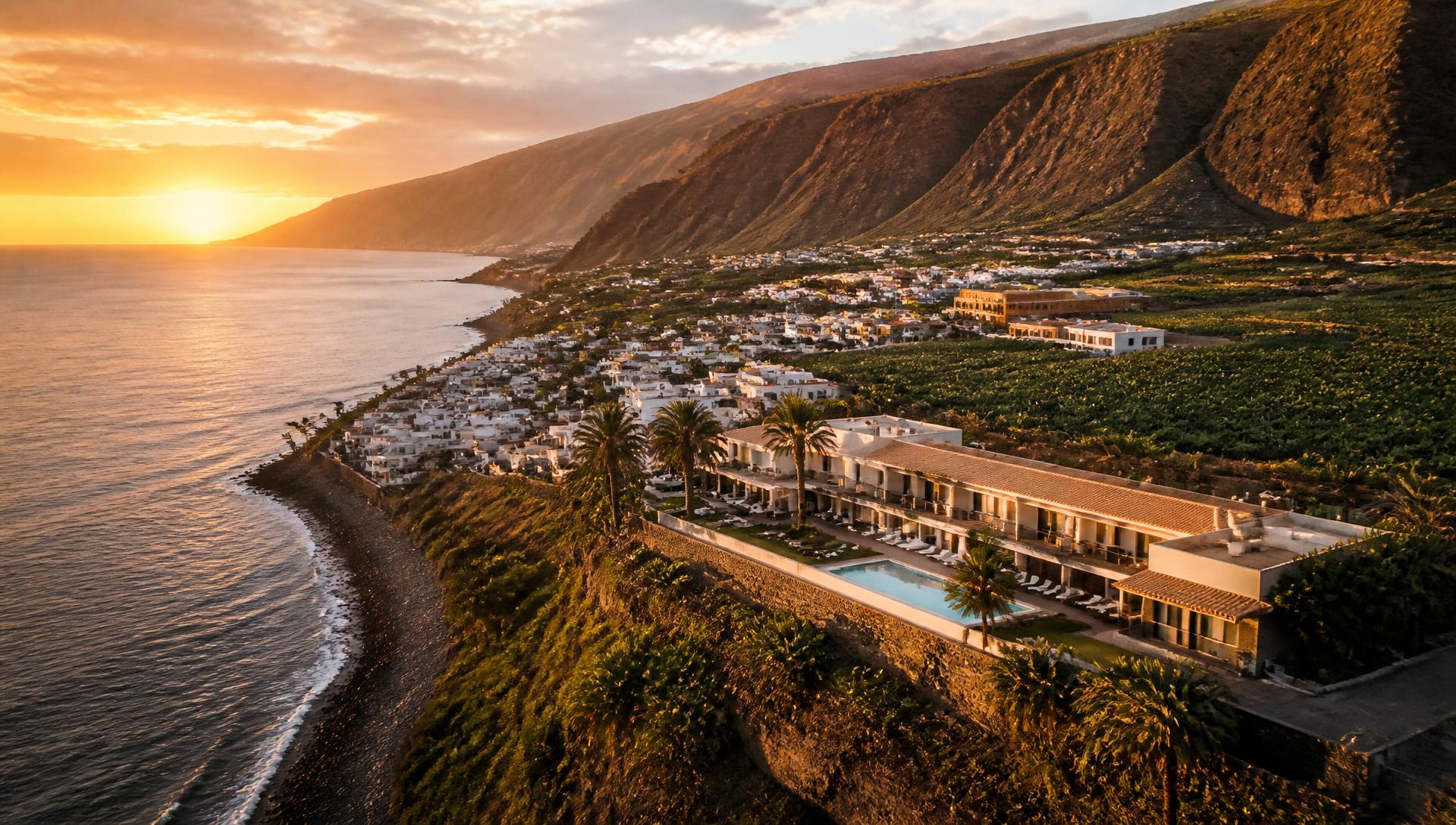
La Palma: A New Stage for Real Estate, Tourism and Commercial Investment
La Palma is entering a new stage for real estate, tourism and commercial investment — with hotel assets, development land, commercial properties and off-market opportunities emerging quietly across the island.
Investment
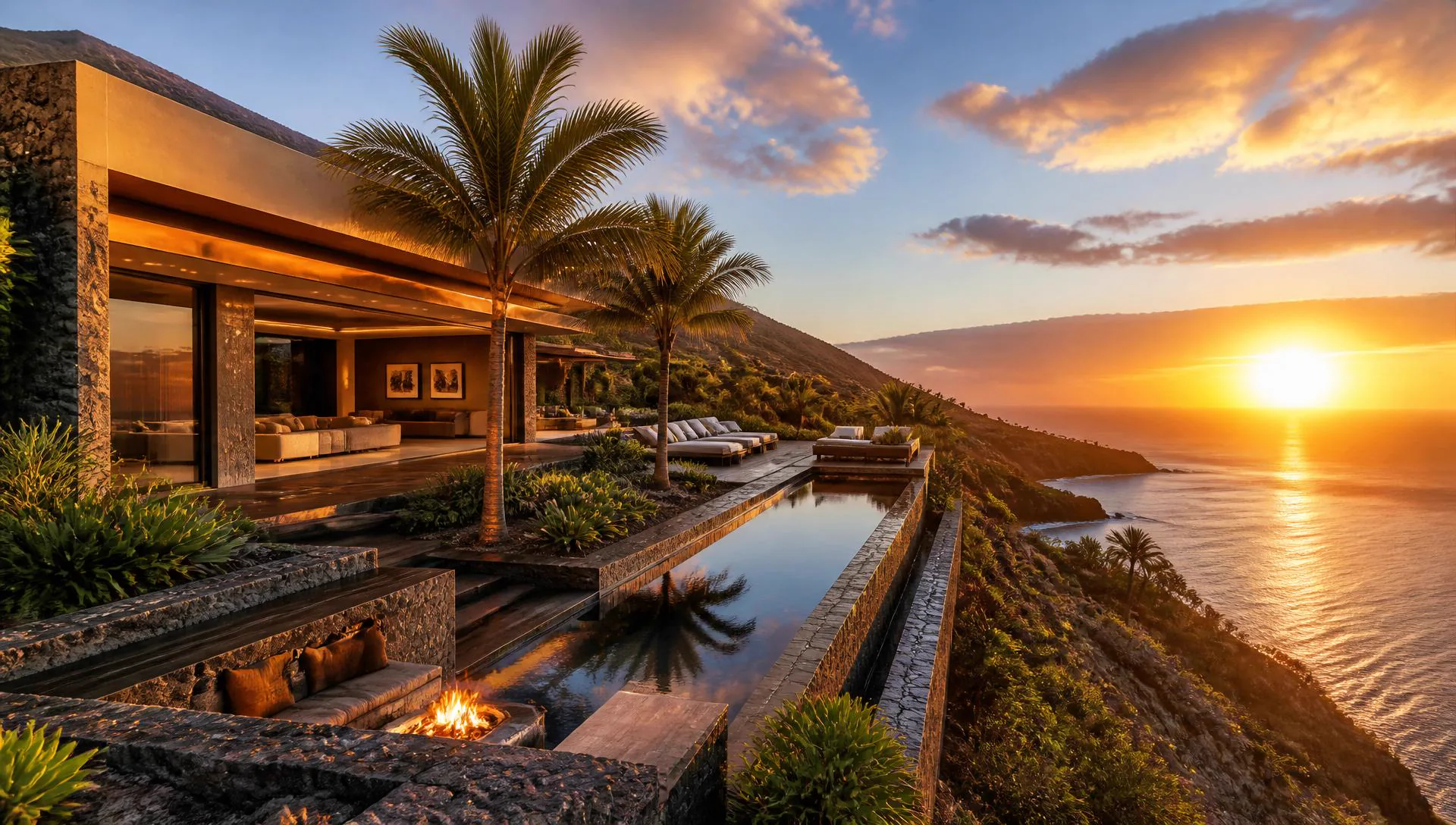
Why La Palma Could Become the Canary Islands' Next Luxury Investment Destination
Luxury property investment on La Palma is entering a new phase — boutique hospitality, sustainable development and discreet international demand are quietly reshaping the island's real estate market.