
Insights
German Buyers Guide to La Palma
Germans, Austrians and Swiss form one of the largest and longest-established international communities on La Palma. Many of the island's most beloved fincas and villas have been owned, restored or built by German-speaking families over the past thirty years.
This guide condenses the practical questions we are asked most often: NIE, taxes, notary, financing, residency, water rights, rustic land and building restrictions. It complements our German-language guide with a topic-by-topic view.
NIE — Foreigner Identification Number
The NIE is the first practical step. It is a tax identification number required for any legal transaction in Spain, including property purchase, opening a bank account and utility contracts. Applications are made at Spanish consulates in Germany, Austria and Switzerland, or in Spain in person.
Timing matters. Consulate slots can be scarce; applying two to three months before a target completion date is prudent. Alternatively, a Spanish lawyer can obtain the NIE by power of attorney, which is often the faster route for international buyers.
Taxes: ITP, IBI, Non-Resident Income Tax
For resale property, ITP (transfer tax) is the principal transaction tax. For new-build, IGIC and AJD apply instead. The exact rates depend on price band and property type and should be confirmed with a local tax advisor.
After purchase, annual obligations include IBI (municipal property tax), non-resident income tax for non-resident owners, and — if applicable — wealth tax. The Canary Islands operate a distinct tax regime (REF) that affects several of these positions favourably.
Notary and Land Registry
The Spanish notary is a public officer, not a private legal advisor. Their role is to verify identity, read the deed, and record the transaction. Legal advice — due diligence, contract negotiation, tax structuring — is the role of your abogado.
After the escritura pública is signed, the notary sends the deed to the Registro de la Propiedad. Registration secures your legal position and is typically completed within a few weeks.
Financing
Spanish banks lend to non-resident buyers, typically up to 60–70% loan-to-value for non-residents versus 80% for residents. Interest rates and terms vary; documentation includes proof of income, tax returns and bank statements — usually translated and apostilled.
German-speaking buyers frequently structure purchases through a combination of Spanish and home-country financing. A local mortgage broker can compare terms across several banks; we introduce buyers to trusted brokers when appropriate.
Residency and Immigration
EU citizens have the right to reside in Spain. The formal step is registration on the Central Register of Foreigners after 90 days of intended residence, obtaining a Green Certificate (Certificado de Registro).
Non-EU buyers can consider the Non-Lucrative Visa (for those with sufficient passive income) or Digital Nomad Visa (for remote workers). Investment-linked residency options exist but have evolved recently; current advice from a specialist immigration lawyer is essential.
Water Rights
La Palma's fincas depend on water rights that are frequently held as shares in comunidades de agua — private water communities. Ownership of a finca does not automatically include water; the water shares are a separate asset that must be verified and, if included, transferred at notary.
A finca without reliable water is materially less valuable and less useful. Verifying water shares is one of the essential due diligence steps before purchase, and part of every mandate we handle.
Rustic Land and Building Restrictions
Rural land (suelo rústico) is regulated to protect the island's landscape. New construction is generally not permitted on suelo rústico común; specific classifications allow limited extensions, agricultural buildings or restoration.
Before purchase, a cédula urbanística from the municipality confirms what is legally possible. We coordinate this step in every mandate. Buyers who assume they can build on rustic land without verifying are often disappointed — verify first, then commit.
The Buying Process in Practice
In practice, a well-prepared German-speaking buyer completes a purchase in six to twelve weeks from reservation. Steps: NIE, reservation, contrato de arras, due diligence (legal, urbanistic, water), escritura pública, registration.
Post-completion, we support handover of utilities, insurance, tax registration and any renovation coordination. See our about page for our end-to-end approach.
The German-speaking community on La Palma has been built on decades of careful, well-prepared transactions. This guide reflects that discipline.
For a confidential conversation about property, residency or investment on La Palma, reach us via the contact page.
Frequently Asked Questions
- Do I need a NIE to buy property in La Palma?
- Yes. The NIE is required for any property purchase in Spain, including La Palma. It can be obtained through a Spanish consulate or by power of attorney via a lawyer in Spain.
- Can German citizens live in La Palma?
- Yes. EU citizens have the right of residence in Spain, formalised by registration on the Central Register of Foreigners after 90 days of intended residence.
- Are water rights included when I buy a finca?
- Not automatically. Water rights on La Palma are frequently held as separate shares in private water communities and must be verified — and, if agreed, transferred — at notary.
- Can I build a new house on rustic land in La Palma?
- Generally no. Suelo rústico común does not permit new construction. Specific classifications allow limited actions. Always request a cédula urbanística before committing.
Confidential Investment Opportunities
Speak with La Palma Exklusive about curated off-market assets and confidential investment opportunities on La Palma.
Contact usLa Palma Exklusive
Related Articles
Investment
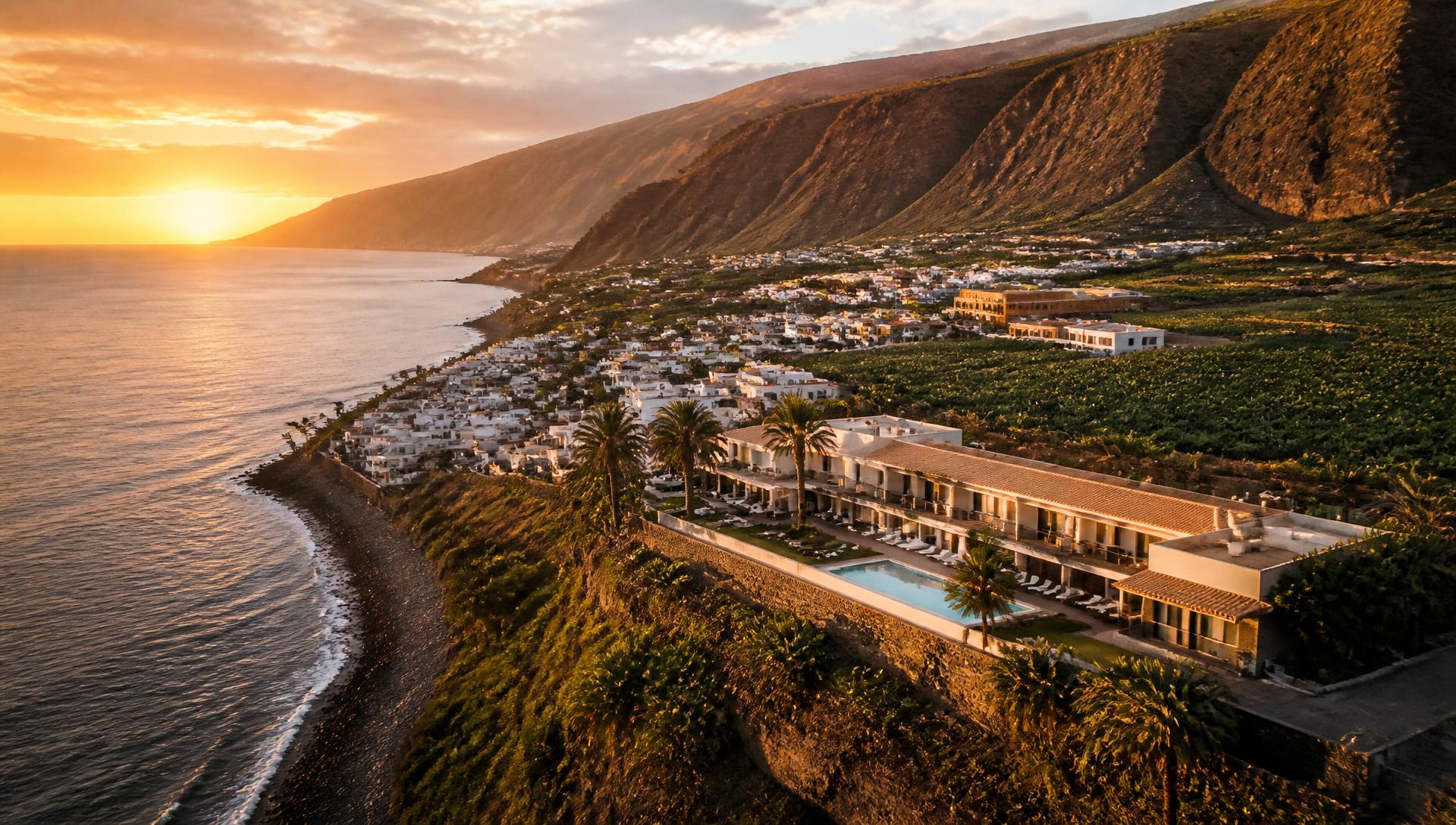
La Palma: A New Stage for Real Estate, Tourism and Commercial Investment
La Palma is entering a new stage for real estate, tourism and commercial investment — with hotel assets, development land, commercial properties and off-market opportunities emerging quietly across the island.
Investment
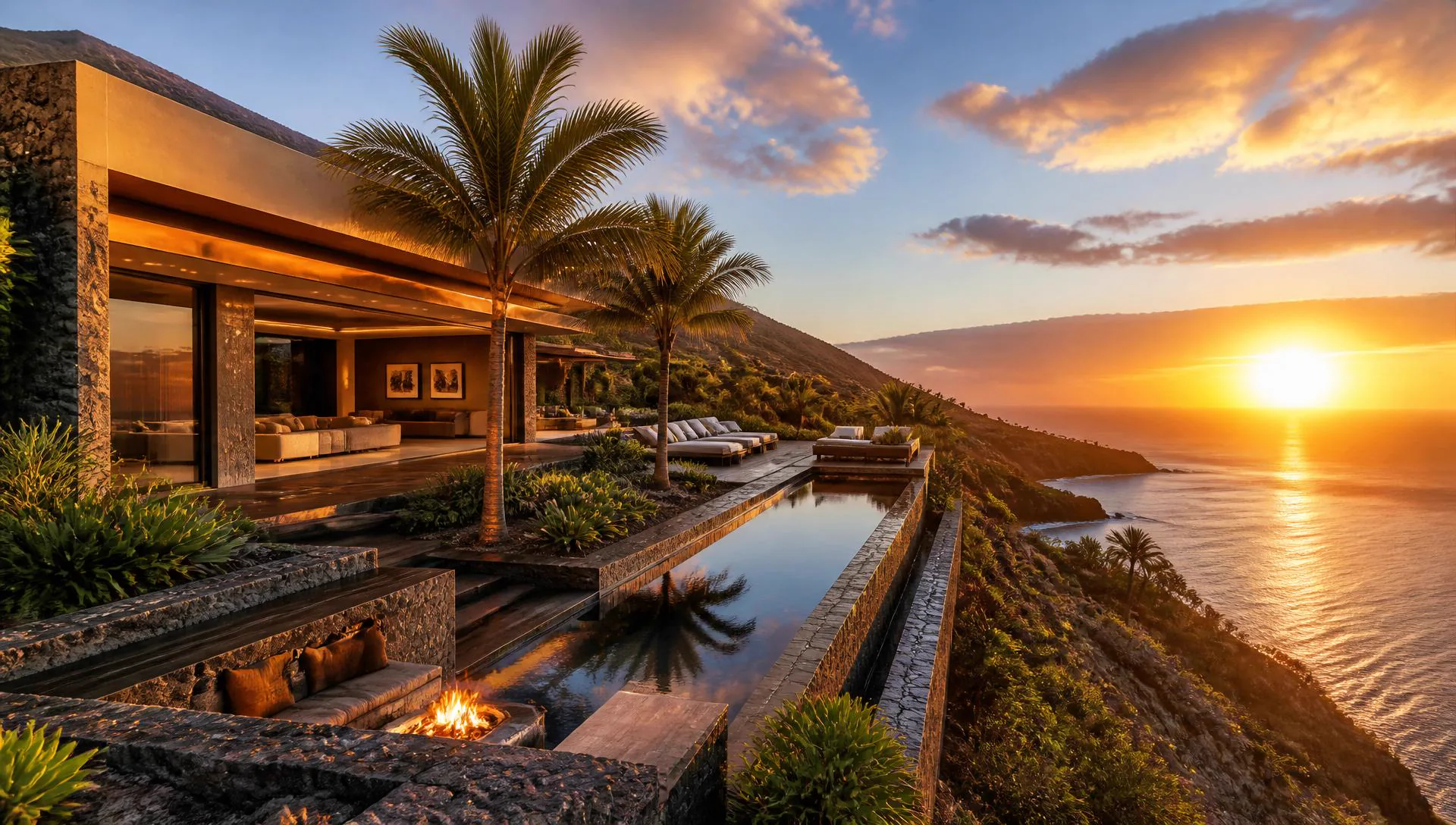
Why La Palma Could Become the Canary Islands' Next Luxury Investment Destination
Luxury property investment on La Palma is entering a new phase — boutique hospitality, sustainable development and discreet international demand are quietly reshaping the island's real estate market.