
Insights
Property for Sale in La Palma: A Guide for International Buyers
La Palma has never been a mass property market, and that is precisely why international buyers who discover it tend to stay. The island's inventory is small, its geography is dramatic, and its transactions are conducted with a level of care and personal contact that has largely disappeared from more competitive southern European destinations. Buying here rewards patience, judgement and a genuine relationship with a local advisor.
This guide sets out what an international buyer should understand before searching for property for sale in La Palma — from the practical mechanics of the market to the categories of property that exist, the areas that suit different lifestyles, and the discreet channels through which the most interesting assets change hands.
How the La Palma Property Market Really Works
La Palma is a supply-constrained market. Portfolios rotate slowly, listings are often carried by only one or two credible advisors, and the same property can appear in three places with three prices — none of which necessarily reflect what a serious buyer would ultimately pay. Public portals are useful for orientation, but they are not, on their own, the market.
Serious enquiries are handled personally. Sellers here are frequently long-standing owners — families, expatriates who arrived decades ago, or agricultural landholders — for whom the sale is a considered decision rather than a transaction to be processed. A buyer who understands this, and who works through a discreet channel, will consistently see better assets and negotiate on better terms than one who tries to sweep the market from a spreadsheet.
Villas, Fincas and Sea-View Homes
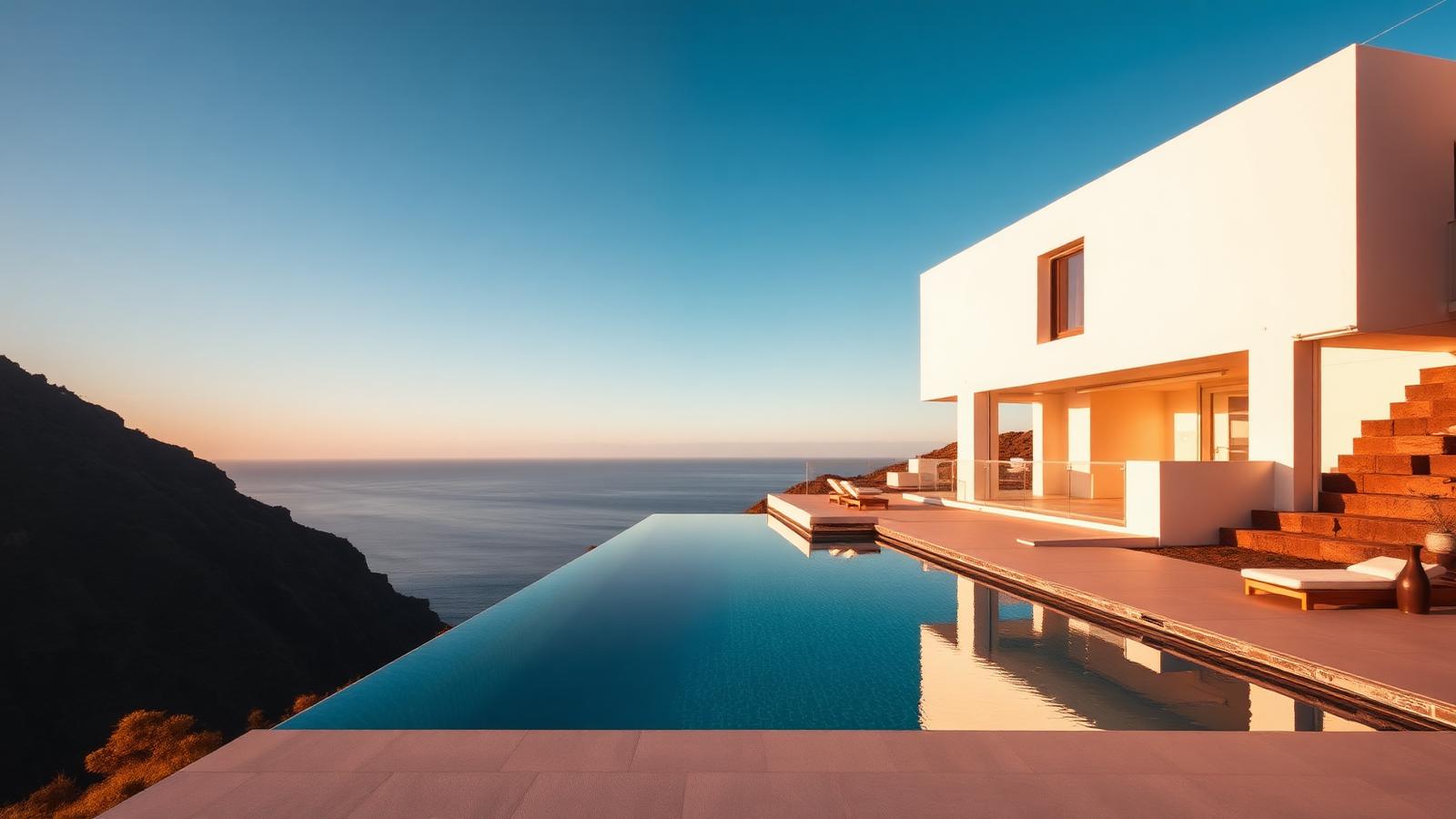
The residential inventory falls into a handful of clear categories. Architect-designed villas — often on the sunny west coast — combine modern building standards with the island's climate advantages: long open horizons, warm winters, and outdoor living for most of the year. These properties tend to sit between €650,000 and several million euros depending on plot, views and finish.
Fincas — traditional Canarian country estates with land — remain the emotional centre of the island's market. Many carry productive terraces, water rights and outbuildings that make them exceptional lifestyle assets and, in some cases, viable agroturismo or hospitality projects. Below that, more accessible sea-view homes exist in the €300,000–€600,000 range in west and north-west villages, offering an entry point without compromising on the island's essential quality of light and space.
Where International Buyers Focus
The west coast — Puntagorda, Tijarafe, Tazacorte, Los Llanos — attracts the majority of international buyers because of climate, views and the quality of the residential stock. Puntagorda in particular has become synonymous with a certain kind of quiet, well-built villa buyer: German, Swiss, Dutch, Nordic and increasingly British.
The east — Breña Alta, Breña Baja, Santa Cruz — appeals to buyers who value proximity to the capital, urban amenities and a more traditional Canarian atmosphere. The north, with El Tablado, Barlovento and Garafía, remains the island's most unspoiled edge, favoured by buyers seeking privacy, land, and landscape at the expense of convenience.
The Buying Process at a Glance
The mechanics are Spanish and well established. An international buyer needs a NIE (foreigner identification number), a Spanish bank account, and a notary appointment for the escritura pública. Reservation deposits typically sit at 5–10%, followed by a private purchase contract (contrato de arras) and completion at notary within an agreed window — commonly 60 to 90 days.
Costs beyond the purchase price include transfer tax (ITP), notary and registry fees, and — for buyers who choose to be represented — legal fees. The precise numbers vary, but a well-advised buyer should budget in the region of 8–11% of the purchase price for total transaction costs. We set these out in detail on our fees page.
Off-Market and Private Transactions
A significant share of the most interesting property on La Palma never reaches public marketing. Sellers of larger fincas, hotel assets, coastal parcels and character villas often prefer a private introduction to a qualified buyer over an open listing. For international buyers who cannot be on the island every week, having a trusted advisor who is means access to a materially different opportunity set.
This is not exclusivity for its own sake. It is a practical response to a small market in which reputational damage from a botched process is immediate and lasting. Owners work with people they trust. Buyers who understand this — and who present themselves seriously — are consistently offered the assets that others never see.
How La Palma Exklusive Represents International Buyers
We work with a small number of international clients at any given time, each with a clearly defined mandate. Our role is to filter the market, verify what is real, negotiate on your behalf, and coordinate the notary, legal and post-completion steps end-to-end. The introduction may begin with a public listing; it rarely ends there.
For qualified buyers, we open access to off-market opportunities, provide honest positioning on price, and remain a single point of contact throughout the transaction. Our about page sets out the firm's approach in more detail.
La Palma rewards buyers who take the time to understand it. The market is small, the assets are personal, and the transactions succeed on the strength of trust and preparation rather than speed.
To review current opportunities — public and private — contact La Palma Exklusive via the contact page or explore our current listings.
Frequently Asked Questions
- Can foreigners buy property in La Palma?
- Yes. Spain places no restriction on non-resident property ownership. International buyers need a NIE (foreigner identification number) and a Spanish bank account, and complete the purchase before a Spanish notary in the standard escritura pública procedure.
- What are the total transaction costs when buying in La Palma?
- Beyond the purchase price, budget approximately 8–11% for transfer tax (ITP), notary and land registry fees, and legal representation. Precise numbers depend on price and structure — see our fees page for a detailed breakdown.
- Are there off-market properties available in La Palma?
- Yes. A significant share of the island's most interesting property — larger fincas, hotel assets, coastal land, character villas — is transferred through private introductions rather than public portals. Qualified buyers can request access through La Palma Exklusive.
- How long does a property purchase take on La Palma?
- Once a reservation and private purchase contract are in place, completion at notary typically takes 60 to 90 days. Buyers who arrive with a NIE and financing structure already prepared can move considerably faster.
Confidential Investment Opportunities
Speak with La Palma Exklusive about curated off-market assets and confidential investment opportunities on La Palma.
Contact usLa Palma Exklusive
Related Articles
Investment
La Palma: A New Stage for Real Estate, Tourism and Commercial Investment
La Palma is entering a new stage for real estate, tourism and commercial investment — with hotel assets, development land, commercial properties and off-market opportunities emerging quietly across the island.
Investment
Why La Palma Could Become the Canary Islands' Next Luxury Investment Destination
Luxury property investment on La Palma is entering a new phase — boutique hospitality, sustainable development and discreet international demand are quietly reshaping the island's real estate market.