
Investment
Why La Palma Could Become the Canary Islands' Next Luxury Investment Destination
For decades, luxury property investment in the Canary Islands has been concentrated in destinations such as Tenerife, Gran Canaria and Lanzarote. Today, a different story is beginning to unfold.
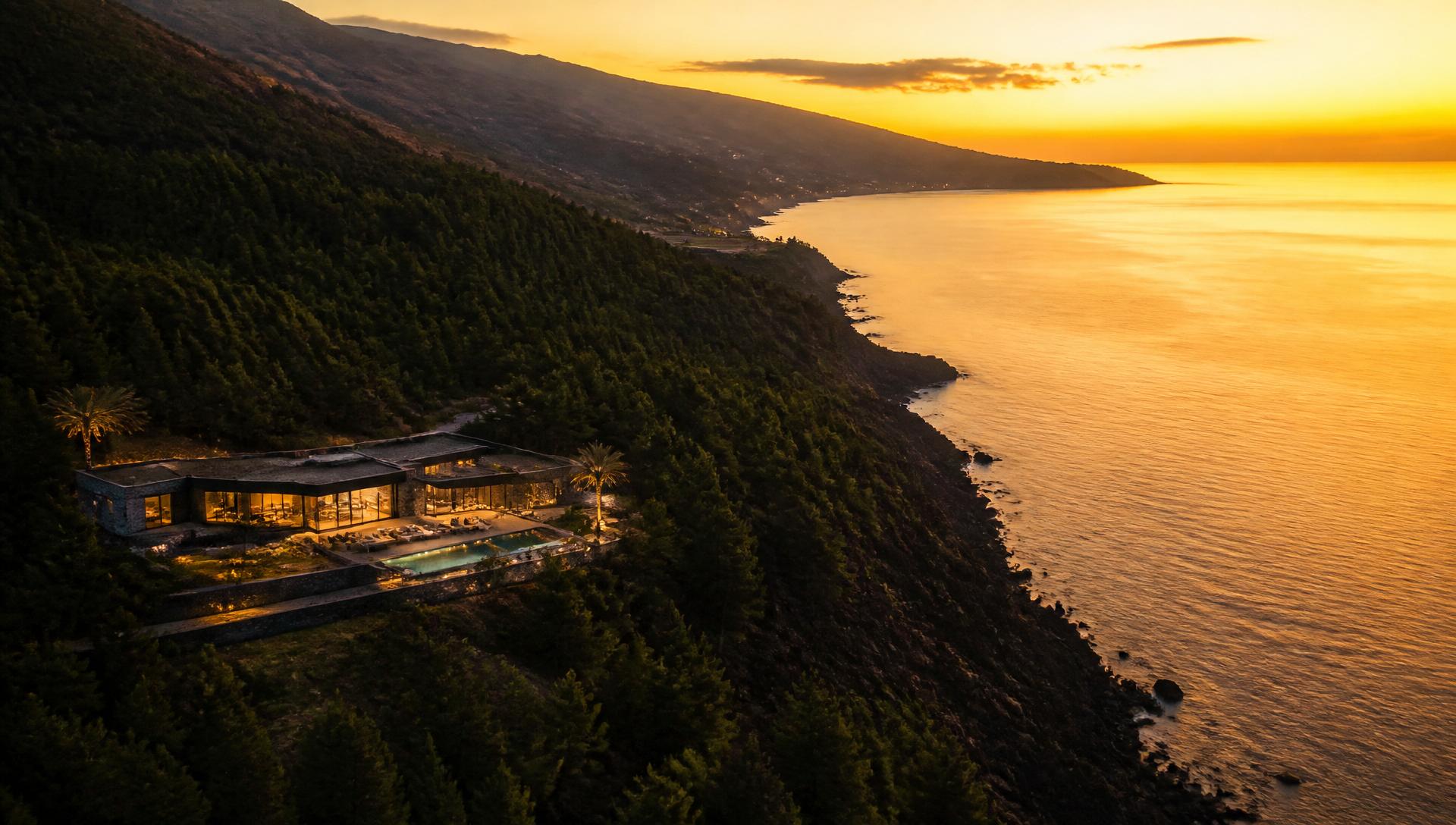
La Palma, long known for its extraordinary natural beauty and protected landscapes, is entering a new phase of development focused on sustainable luxury tourism, boutique hospitality and carefully planned investment. The island remains quiet, deliberate and largely undiscovered by the international markets that have shaped its larger neighbours — and that, for the right investor, is precisely the point.
A Quiet Shift in International Awareness
Until recently, La Palma was a destination known mainly to hikers, astronomers and a small circle of European residents who valued its natural character. Over the past few years, international awareness has begun to broaden — not through mass-market campaigns, but through editorial coverage, private referrals and the gradual recognition that the island offers something the Mediterranean's better-known destinations no longer can.
Enquiries reaching our advisory now come predominantly from Germany, Switzerland, Austria, the Netherlands, Belgium and Scandinavia. The profile is consistent: experienced buyers, often already invested in the Balearics or southern Spain, who are looking for a quieter, more authentic and more enduring proposition.
Boutique Hotels and a Considered Tourism Strategy
The island's tourism direction is, by design, the opposite of the high-volume model that has defined other archipelagos. The Cabildo and municipal authorities have favoured low-density, character-led development: small boutique hotels, restored rural estates, agroturismo and discreet hospitality projects that complement rather than overwhelm the landscape.
For investors, this matters. A planning framework that restricts large-scale resort development tends to protect long-term value. Scarcity becomes structural rather than cyclical, and well-positioned hospitality assets — particularly those with historic character or exceptional sites — acquire a defensibility that mass-market product simply does not have.
Sustainable Development Over Mass Tourism
La Palma's status as a UNESCO Biosphere Reserve and the world's first Starlight Reserve is not a marketing label. It is reflected in actual planning policy: protected coastlines, restricted building heights, careful treatment of agricultural land and a clear preference for projects that integrate with the island's natural and cultural fabric.
The result is a property market that is unlikely to repeat the overdevelopment cycles seen elsewhere in southern Europe. For buyers focused on long-term capital preservation, this discipline is one of La Palma's most underappreciated advantages.
New Infrastructure and Improving Connectivity
Recent years have brought meaningful infrastructure improvements: upgraded road links between the principal valleys, ongoing investment in the island's hospitals and public services, and the steady modernisation of La Palma Airport. None of this has been showy. All of it materially improves the practicality of living, visiting and operating a property here.
Airline connectivity has also expanded. Direct seasonal routes from several European capitals now complement the established connections via Madrid and Tenerife. Each new route widens the addressable market for both the residential and the hospitality segments — and tends to lift demand at the upper end of the residential market first.
Growing International Demand at the Premium End
The composition of demand has changed noticeably. A decade ago, the international buyer profile on La Palma was dominated by lifestyle relocators acquiring modest second homes. Today, we see a meaningful and growing share of enquiries focused on premium villas, finca estates with land, restored historic properties and boutique investment assets.
This shift is consistent with what tends to happen as a market matures: lifestyle buyers establish a community, the destination gains credibility, and capital that is sensitive to scarcity follows. La Palma is, in our view, somewhere in the middle of that cycle — early enough that values remain materially below comparable islands, late enough that the underlying conditions for premium investment are clearly in place.
The Scarcity of Premium Real Estate
True luxury inventory on La Palma is genuinely scarce. The island has only a limited number of architecturally significant villas, premium coastal plots, historic estates and large agricultural holdings of investment scale. The planning framework constrains new supply, and existing owners — many of whom hold their properties through generations — are slow to bring assets to market.
When premium properties do become available, they are frequently transacted privately, without public listing. This is a structural feature of how the upper end of the market actually operates here, not a stylistic choice.
Why Early Investors Tend to Benefit
In any maturing destination, the most significant value tends to be created in the period before wider market recognition. Buyers who acquired in Mallorca, Ibiza or the Algarve a generation ago benefitted not from speculation but from being present in a market whose underlying qualities were not yet fully priced.
La Palma today shares several of those characteristics: a constrained supply, a clear and protected identity, growing international attention and a price base that does not yet reflect the destination it is becoming. We are careful not to overstate this. Past patterns elsewhere are not guarantees. But for investors with a long horizon and a preference for tangible assets in stable European jurisdictions, the case for considered exposure to La Palma is, in our view, increasingly difficult to dismiss.
The Growing Value of Off-Market Opportunities
As demand at the premium end has strengthened, the proportion of meaningful transactions taking place off-market has risen. Owners of trophy properties, large fincas and boutique hospitality assets often prefer the discretion of a private process: confidentiality is preserved, qualified buyers are introduced individually, and price discovery happens in conversation rather than on a public portal.
For investors, the implication is straightforward. The most interesting opportunities on La Palma are rarely the ones visible on aggregator sites. They are introduced through trusted, locally embedded advisory relationships — quietly, and to a small circle of qualified parties.
Long-Term Investment Potential
La Palma is not a short-cycle market and should not be approached as one. Its appeal lies in fundamentals that compound slowly: limited supply, a protected environment, a stable European legal framework, the tax framework of the Canary Islands, and a destination identity that is being shaped with unusual care.
For investors looking beyond a single property — into boutique hospitality, development land, agricultural estates or diversified investment positions — the island offers a combination of attributes that is genuinely uncommon in contemporary southern Europe.
La Palma Exklusive operates as a boutique property and investment advisory, not a traditional estate agency. Our work is concentrated, deliberate and frequently confidential.
If you would like to discuss the island's investment landscape, explore selected off-market opportunities or receive a discreet introduction to assets that are not publicly marketed, we invite you to contact us in confidence.
Confidential Investment Opportunities
Speak with La Palma Exklusive about curated off-market assets and confidential investment opportunities on La Palma.
Contact usLa Palma Exklusive
Related Articles

Insights
The Complete Guide to Buying Property on La Palma
A measured, practical account of how international buyers acquire homes and land on La Palma — from the first viewing to the notary, and the considerations that matter most along the way.

Insights
Tax Advantages of Investing in the Canary Islands: What Many International Buyers Don't Know
The Canary Islands' special economic and tax regime, IGIC, the ZEC and La Palma's real estate opportunities: a measured look at why the archipelago is attracting growing international capital.