
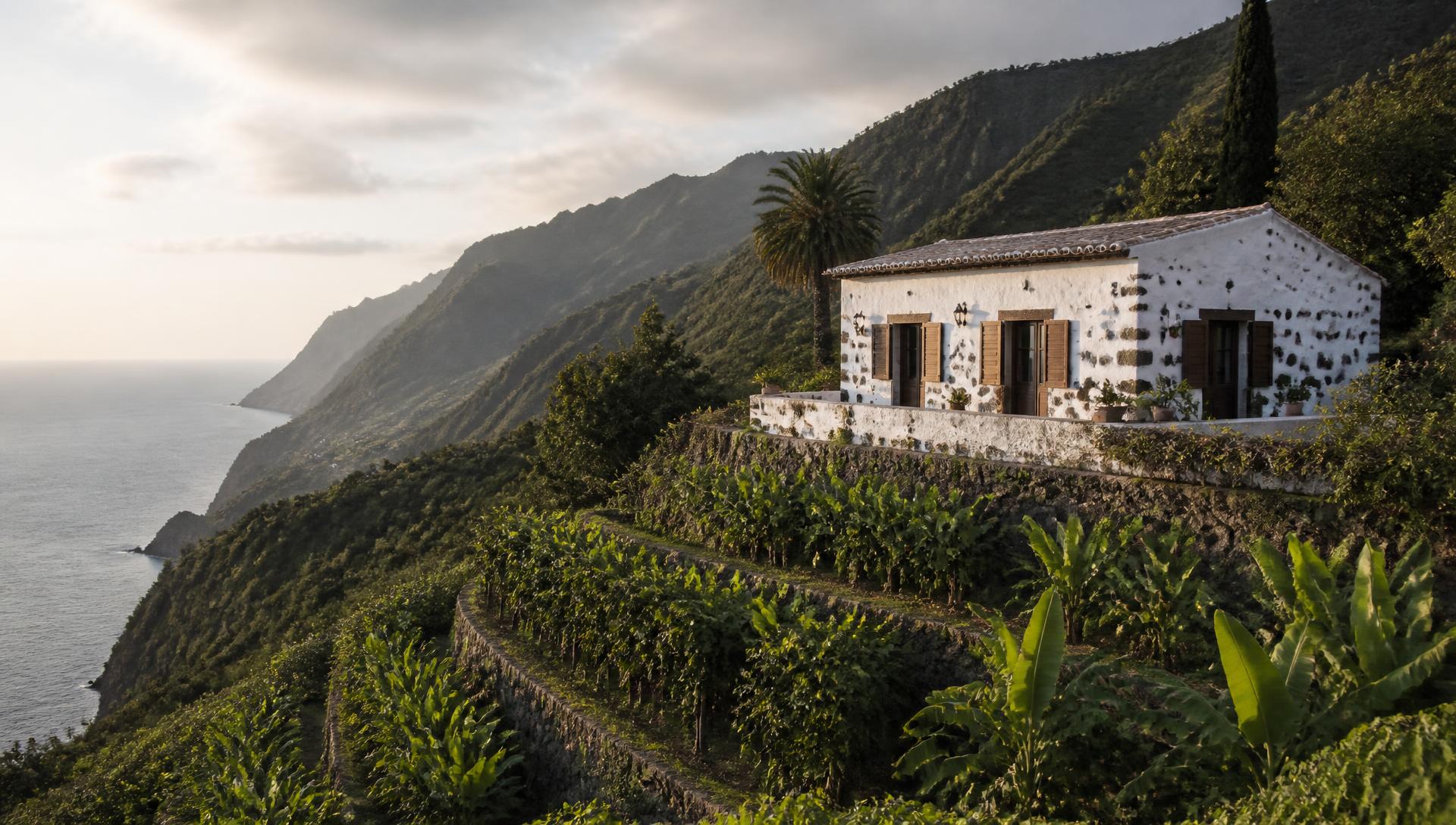
Insights
Buying Property on La Palma: The Complete Guide
Most people who contact us about buying on La Palma are not looking for a holiday home in the south of Europe. They are considering moving their life here. That changes the questions entirely. They are rarely about yield and almost always about practicalities: winter driving times, water supply, how steep the access track is, whether the house is actually registered, and what could realistically be sold again later.
This guide answers those questions the way we answer them on a viewing. It is deliberately not an investment piece. It is written for people who genuinely intend to buy property on La Palma and want to avoid the mistakes that are unusually expensive on this island.
La Palma is structurally different from Tenerife or Gran Canaria. There are no large gated urbanisations, very little developer-built new build, no mass tourism and no liquid market. The stock is small, historic and shaped by terrain. Buyers who understand this buy well. Buyers who treat the island like a mainland coastal market buy against reality.
Why buy property on La Palma?
La Palma is the greenest and steepest of the Canary Islands. Around 85,000 people live across 708 square kilometres, much of which is protected landscape, national park or unbuildable slope. That low density is the real reason international buyers stay: you live in a functioning village with a bakery, a doctor and a primary school, not in a holiday zone that empties in October.
The climate is mild and highly localised. The west is drier and sunnier, the east greener and wetter, and the band between 400 and 800 metres is generally considered the most comfortable place to live. Twenty minutes of driving takes you from subtropical coast to laurel cloud forest. For buyers this means the microclimate question matters more than the sea-view question.
Nature is the second factor. The Caldera de Taburiente national park, the volcanic route, the northern laurel forests and one of the world's best-protected night skies shape daily life rather than just holidays. The island has been a UNESCO Biosphere Reserve since 2002, which permanently constrains development and keeps stock scarce.
Safety and everyday quality are underrated arguments. Crime is very low, healthcare runs through the Hospital General de La Palma in Breña Alta, schooling covers the whole island, and access is via Tenerife and Madrid with some seasonal direct flights.
The international community is established but not dominant. Germans, Belgians, Dutch and Scandinavians have lived for decades in Puntagorda, Tijarafe, El Paso and Los Llanos. That eases arrival, but it does not replace Spanish. Anyone living here permanently will need it for the notary, the town hall, tradespeople and administration.
The 2021 Cumbre Vieja eruption belongs in any honest briefing. It affected a clearly defined area within Los Llanos, El Paso and Tazacorte. The rest of the island was never directly affected, reconstruction is well advanced, and demand for housing in the northern and eastern municipalities has been structurally higher since.
The best areas to buy
On La Palma the municipality determines quality of life more than the condition of the house. Sunshine hours, driving times, infrastructure and price levels differ enormously between the north-west and the east. The following assessments come from continuous market work; prices are 2026 orientation figures and vary widely with access, water and legal status.
Puntagorda in the north-west is the classic choice for northern European buyers. Hillside land between 400 and 900 metres, a great deal of sun, almond groves, an active organic market and a decades-old German-speaking community. It suits smallholders, people seeking quiet, and families who value space. Fincas with a house typically run between €200,000 and €450,000; land starts around €30,000. The trade-off is 45 to 55 minutes to Los Llanos, a lot of rustic land, and water as the decisive question.
Tijarafe adjoins it to the south, slightly closer to Los Llanos and often cheaper. It is characterised by ravine settings, old vine terraces and traditional houses needing work. It suits buyers with building experience or patience. Renovation projects start around €90,000 to €150,000; finished houses cost considerably more. The trade-off is very steep access in places and complicated inherited ownership.
Los Llanos de Aridane is the commercial centre of the west: hospital access, supermarkets, schools, restaurants, a pedestrian centre. It suits anyone who wants infrastructure without a car, and families. Apartments near the centre run roughly €120,000 to €220,000; town houses and villas in the surroundings cost significantly more. The trade-off is density, less quiet, and proximity to the 2021 eruption area, which calls for careful site assessment.
El Paso sits at around 600 metres in the middle of the island, with national park access and a very balanced climate. It suits buyers who want to reach both coasts quickly. Houses with land often run €250,000 to €500,000. The trade-off is limited supply, real competition for good properties, and cooler winters than the coast.
Breña Alta lies above Santa Cruz: green, well connected and next to the Hospital General. It suits buyers prioritising comfort and short distances, particularly later in life. Well-maintained houses typically run €250,000 to €450,000. The trade-off is less dramatic openness than the west and frequent cloud build-up.
Breña Baja lies below it, closer to the sea and the airport, with some of the island's few apartment developments and a mild coastal climate. It suits commuters, apartment buyers and anyone who values airport proximity. Apartments often start around €130,000. The trade-off is limited land availability and aircraft noise in specific spots.
Santa Cruz de La Palma is the capital: colonial old town, port, administration, culture. It suits urban buyers who value historic fabric. Old-town houses can be found from around €100,000, but are almost always listed and expensive to restore. The trade-off is parking, damp in old buildings, and restrictions on façades and wooden balconies.
As a rule of thumb: sun, land and quiet mean the north-west; infrastructure and access mean the east or Los Llanos; both together mean El Paso, at a price. Current availability by municipality is on our property page.
What types of property exist?
The villa in the mainland Spanish sense is rare here. What is marketed as a villa is usually a detached modern house, often with a pool, on urban or semi-urban land, with secured access and mains connections. This is the easiest category to finance and to resell.
The finca is the true classic: a dwelling with agricultural land, usually terraced, planted with almonds, vines, avocado or bananas. Size and legal status vary enormously. What matters is not the area but whether the dwelling is legally registered and whether water rights exist.
The traditional Canarian house is stone-built with Canary pine beams, a courtyard and rooms added over generations. The character is considerable and so is the restoration cost — realistically €800 to €1,600 per square metre for a full renovation, more where listed status or difficult access apply.
Apartments exist almost exclusively in Los Llanos, Santa Cruz, Breña Baja and Tazacorte. They are the pragmatic entry point: low maintenance, clean title, community fees usually under €60 a month. For buyers who want to live here a year before buying land, this is often the sensible move.
The bodega is a historic wine or storage building, often vaulted with thick walls. Many are converted to living space, which is possible but requires permission. A bodega without residential-use consent is not a house, however it looks.
The pajero — the traditional small field store — is frequently marketed as convertible. In practice conversion on rustic land is tightly limited and rarely permitted for residential use. Buying a pajero means buying land plus an existing structure, not a future house.
Land differs fundamentally according to whether it is classified as suelo urbano (urban building land), suelo urbanizable (developable) or suelo rústico (rural). That classification, not the price per square metre, sets the value. On rustic land, residential building is either excluded or tied to minimum plot sizes, setbacks and agricultural use.
Agricultural land — coastal banana plantations, vine terraces in Fuencaliente and the west, avocado and almond plots at mid altitude — is increasingly bought by owners who actually farm or lease it. Water rights and irrigation access determine almost the entire value.
Commercial property is a small but real market: retail units in Los Llanos and Santa Cruz, small guesthouses, restaurants and licensed holiday-rental assets. The framework is set out on our investment page.
How the purchase process works
The first step is the NIE, the Spanish tax identification number for foreigners. Without it you cannot complete a deed, run an account usefully or pay tax. Apply through the national police in Santa Cruz or a Spanish consulate; a lawyer can do it under power of attorney. Allow two to six weeks.
A Spanish bank account is effectively indispensable, because the notary, taxes, electricity, water and municipal charges are all handled locally. For the purchase funds themselves, notaries require proof of source of funds; prepare this early for transfers from abroad.
Then comes the reservation, typically €3,000 to €10,000, taking the property off the market for a defined period. The agreement must state the refund conditions — particularly if legal due diligence uncovers defects.
The private contract, usually a contrato de arras, follows the checks. A 10 per cent deposit is standard. Under the common arras penitenciales, a withdrawing buyer forfeits the deposit and a withdrawing seller pays double. Four to ten weeks typically pass between arras and completion.
Before completion comes due diligence: a current nota simple from the land registry, the cadastral record, a comparison of registered against built structures, a municipal certificate on buildability, the habitation certificate, the energy certificate, proof of paid IBI property tax and community fees, and confirmation the property is free of charges. On La Palma, the mismatch between registry, cadastre and reality is the single most common reason purchases fail or are renegotiated.
Completion takes place before a notary on the island. Both parties attend in person or by power of attorney; buyers who do not speak Spanish need a sworn interpreter. Payment is normally by bank-certified cheque or evidenced transfer. Possession and keys pass on signature.
Taxes and registration follow. On resale purchases the Canary transfer tax ITP applies, currently 6.5 per cent, payable within 30 working days. Developer new build attracts IGIC at 7 per cent plus AJD stamp duty instead. Add notary, registry and lawyer, and total acquisition costs are around 9 to 11 per cent. Registration at the Registro de la Propiedad follows tax payment and takes a few weeks. A full breakdown is on buying in Spain and fees.
Why many properties cannot be financed
Buyers are consistently surprised by how many attractive La Palma properties no bank will lend against. The reason is almost never the buyer; it is the property's legal position. Spanish banks fundamentally lend only against what they could realise in a forced sale, and that requires clean registration.
Rustic land is the most common disqualifier. On suelo rústico residential building is heavily restricted, and many existing houses were built decades ago without permission and never registered. They appear in the cadastre but not, or only partly, in the land registry. Banks then value the land alone — often a fraction of the asking price.
Urban land is the counterpart: registered, serviced, with building rights under the municipal plan. Fully registered urban properties with a habitation certificate finance normally at 60 to 70 per cent of the bank valuation, closer to 60 for non-residents.
Between the two lies the most common case: a house built legally, extended later, and never updated on the register. The remedy is the declaración de obra nueva antigua, which registers older construction after the limitation period with a technical report. It takes months and usually a few thousand euros, but it transforms both financeability and resale value.
The practical consequence: if you need a mortgage, narrow your search early to registered properties on urban land. Cash buyers can access a much larger and often more interesting part of the market — but must price the registration position themselves, because it returns as an issue on resale.
The most common mistakes buyers make
First: buying for the view. Views are good almost everywhere on La Palma. They are not a differentiator and they will not carry a bad decision on access, water or legal status.
Second: not testing the access. A steep unsurfaced track is charming in August and a problem in February. Check surface, gradient, width, turning space, winter usability and above all whether it is a public road or a private right of way over someone else's land. An unregistered right of way is a risk, not a detail.
Third: not checking water. Mains connection, cooperative water rights, a cistern and tanker delivery are four entirely different situations with different costs and security. On the dry west side, water determines whether land is usable at all.
Fourth: not reconciling registry and cadastre. If the registry says 80 square metres and 160 are built, you are legally buying 80. This reconciliation is mandatory here, not optional.
Fifth: ignoring planning. Buildability comes from the municipal plan and island-level planning, not from what a seller or neighbour says. A written municipal opinion is inexpensive and settles a great deal.
Sixth: not thinking about resale. A remote, unregistered property without mains water will face the same small buyer pool in five years as it does today. Accept that and you can buy. Overlook it and you lose money.
Seventh: underestimating renovation. Materials are shipped in, good tradespeople are booked out, and build times run longer than in northern Europe. Budget a 25 to 30 per cent buffer on any first estimate.
Eighth: buying without an independent lawyer. The notary checks identity and form, not your commercial interests. An independent abogado costs around one per cent of the price and is the cheapest insurance in the process.
Ninth: searching online only. A substantial share of stock is never publicly listed here. Portal-only buyers see a slice, and often the properties that have sat longest.
Tenth: buying too quickly. The most common cause of later regret is a purchase made in the second week of a holiday. We advise every buyer to experience one winter here first.
Eleventh: leaving tax and residency until afterwards. More than 183 days a year in Spain makes you tax resident there. Structure that before buying, not after.
Twelfth: assuming holiday rental. Tourist letting requires a licence, and eligibility depends on land classification, municipality and the property. Never build a calculation on a licence that does not yet exist.
How to find off-market properties
A significant share of La Palma transactions happens without a public listing. That has little to do with exclusivity and much to do with culture. Many owners are families selling an inherited house, older people moving into the village, or long-term residents returning home. They want neither viewing tourism nor a public price tag on their family history.
These properties move through relationships — notaries, accountants, surveyors, neighbours and agents who have worked the same villages for years. Access does not come from contacting every agency at once; it comes from a clearly defined brief held by a few people who will actually pass it on.
In practice: define your budget, your municipalities, your minimum requirements on access and water, and your tolerance for renovation and registration status. A precise brief gets circulated; a vague one does not. At La Palma Exklusive we hold such briefs confidentially and come back when something fits, even if that takes months. You can leave one through the contact page.
Why work with a local boutique agency
There is no unified multiple listing service on La Palma. No shared central database exists. Anyone who knows this market knows it through presence, not data access, which is exactly why results differ so much between advisors.
The practical value of local work lies in details no portal captures: which access becomes impassable in winter, which municipality processes retrospective registrations quickly, which well runs dry in summer, which inheritance group can actually sell, and which asking price has become negotiable after years on the market.
A serious agency will also tell you when not to buy. We have repeatedly advised buyers against properties that looked excellent and were not legally sound. That is not a sales argument; it is what makes the island work for you long term.
When choosing, look for three things: a written, transparent fee structure, willingness to disclose documentation before reservation, and a clear recommendation to appoint an independent lawyer. Our own approach is documented under about and fees; sellers will find the process under selling.
Buying property on La Palma is not complicated, but it is exacting. The three questions that decide between success and disappointment are always the same: is access secured, is water secured, and does the land registry match reality. Buyers who check those three with discipline rarely buy badly here.
Current properties are on our property page. For a confidential conversation about a specific property or a search brief, reach us through the contact page. Further reading on tax, regions and market structure is under insights.
Frequently Asked Questions
- Can foreigners buy property on La Palma without restrictions?
- Yes. EU citizens face no restrictions on buying property in Spain, and non-EU buyers face only administrative requirements. You need an NIE number and, in practice, a Spanish bank account.
- What are the purchase costs?
- Around 9 to 11 per cent in the Canaries: 6.5 per cent ITP on resale (or 7 per cent IGIC plus AJD on developer new build), plus notary, registry and lawyer.
- How long does a purchase take?
- Typically eight to fourteen weeks from reservation to keys. Missing NIE numbers, inheritance groups or retrospective registrations extend this considerably.
- Do I need my own lawyer?
- We recommend it without exception. The notary verifies form and identity, not your interests. An independent lawyer costs around one per cent of the price.
- What does a finca cost on La Palma?
- Fincas with a dwelling commonly run €200,000 to €450,000 depending on municipality, access, water and registration status. Renovation projects start well below that.
- What does land cost?
- Rustic plots start around €15,000 to €40,000; urban building plots cost considerably more depending on location and services. Classification drives value more than area.
- Can non-residents get a Spanish mortgage?
- Yes, usually 60 to 70 per cent of the bank valuation on registered properties on urban land. Houses on rustic land without clean registration are generally not financed.
- Why are some houses not in the land registry?
- Many were built or extended decades ago without permission. They appear in the cadastre but not fully in the registry. A retrospective declaration can often cure this.
- What is the difference between suelo rústico and suelo urbano?
- Suelo urbano is serviced building land with development rights. Suelo rústico is rural land with heavily restricted or excluded residential building. The difference drives financing, use and resale.
- How does water supply work?
- Depending on location: municipal mains, a water cooperative with tradable rights, a cistern, or tanker delivery. On the dry west side, resolve the water question before any purchase.
- Is La Palma safe after the 2021 eruption?
- The eruption affected a clearly defined area in Los Llanos, El Paso and Tazacorte. The island is continuously monitored, reconstruction is well advanced, and the remaining property stock was never directly affected.
- Which municipality suits international buyers best?
- Puntagorda and Tijarafe for land and sun, Los Llanos for infrastructure, El Paso for a central position, and Breña Alta or Breña Baja for hospital and airport proximity.
- Can I let my property to tourists?
- Only with a tourist licence, and eligibility depends on land classification, municipality and the property itself. Never rely on a licence that is not already in place.
- What are the running costs?
- IBI property tax typically €150 to €600 a year, plus refuse charges, water, electricity, insurance and any community fees. Non-residents also pay the annual non-resident tax.
- Must non-residents file a Spanish tax return?
- Yes. Owner-occupied second homes are taxed annually on a notional value through Modelo 210; rented properties are taxed on actual income.
- When do I become tax resident in Spain?
- After more than 183 days in a calendar year, or when your centre of vital interests is in Spain. Plan the transition in advance.
- What does restoring an old Canarian house cost?
- Realistically €800 to €1,600 per square metre for a full renovation, more with listed status, difficult access or structural work.
- How do I get to La Palma?
- Via Tenerife North, Gran Canaria or Madrid, with some seasonal direct flights from northern Europe. Total travel time is usually seven to ten hours.
- Do I need Spanish?
- An interpreter is enough for the purchase. For living here — administration, tradespeople, neighbours, healthcare — Spanish is effectively essential.
- How do I find properties that are not publicly listed?
- Through a precise written brief held by a few locally rooted contacts. A large share of La Palma sales runs through personal channels rather than portals.
- Should I rent on the island before buying?
- We recommend it. One winter on La Palma reveals damp, wind, cloud, driving times and daily logistics far more reliably than three summer viewings.
- How long does it take to sell a property on La Palma?
- Three to nine months with a realistic price and clean legal status. Properties with incomplete registration or difficult access take considerably longer.
Confidential Investment Opportunities
Speak with La Palma Exklusive about curated off-market assets and confidential investment opportunities on La Palma.
La Palma Exklusive
Related Articles
Insights
Buying a House in Spain from Abroad Without Viewing It in Person
Buying a property without visiting it in person does not mean buying blind. Here is how to structure a secure remote purchase through live viewings, document checks, a technical inspection and legal representation in Spain.
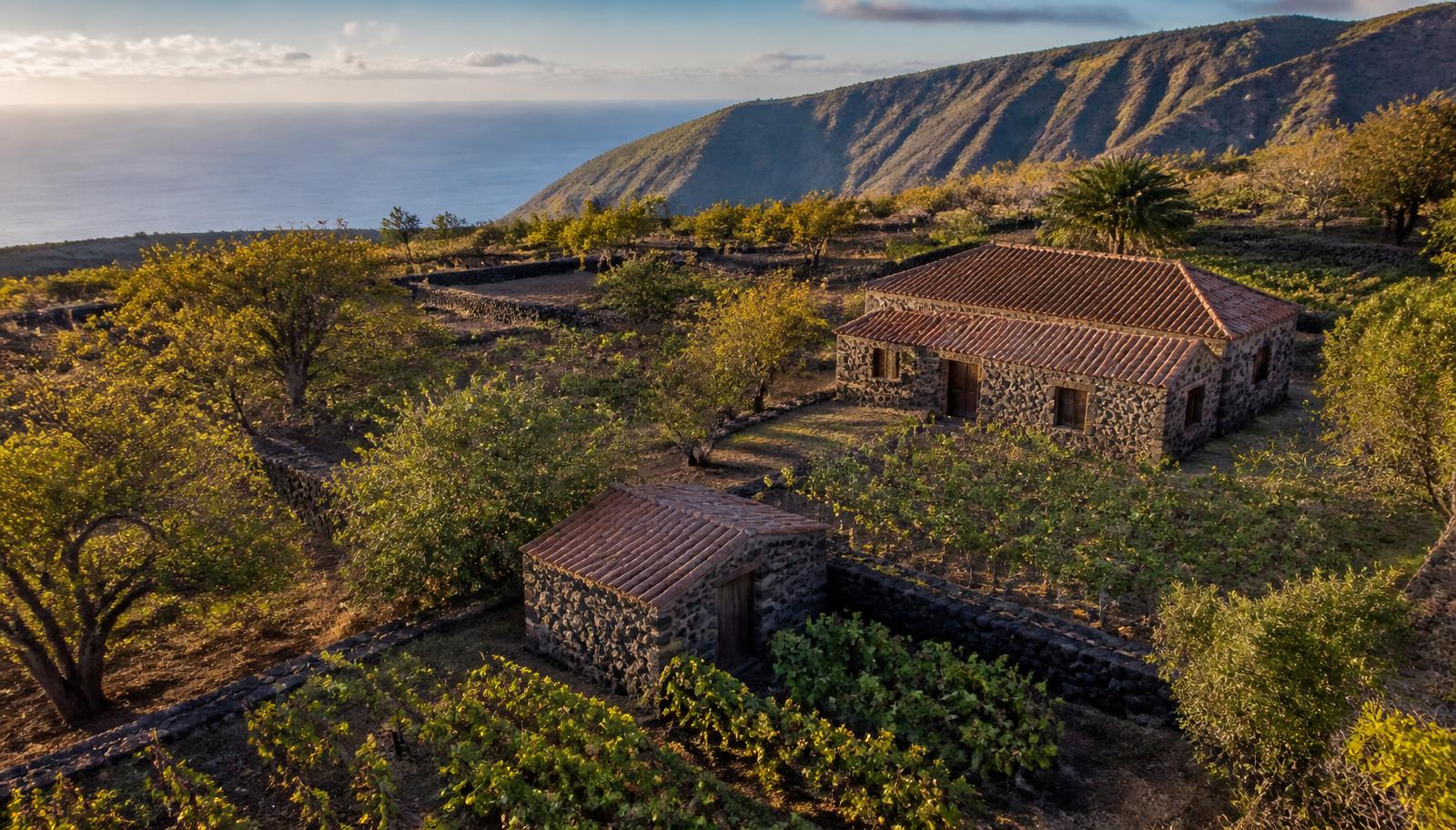
Insights
Buying land in La Palma: what can be built, restored or developed — and what to check first
Land classification, existing buildings, Catastro versus Land Registry, the Green Islands framework and a practical due-diligence checklist before buying rural land on La Palma.